


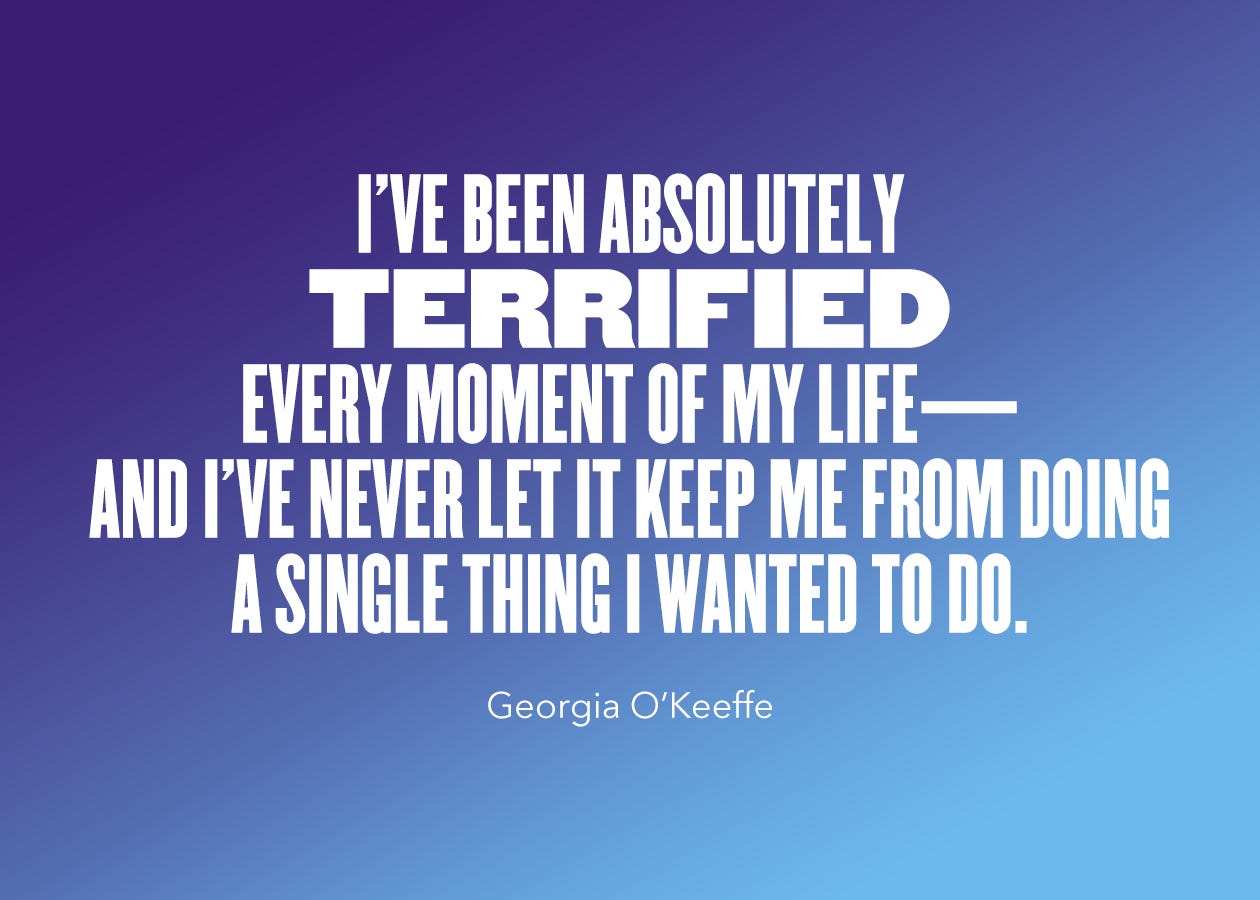
I caught myself doing it again.
Spinning out in “what ifs.”
What if I’ve taken on too much?
What if I can’t handle what’s coming next month?
What if I don’t make enough next month to cover the bills?
What if I miss a week of this newsletter?
What if, what if, what if…
What will people think of me… if?
Sound familiar?
As I caught myself in this worry cycle, I realized: these thoughts weren’t just occupying mental space — they were draining my creative battery. The very energy I needed for the day ahead.
It got me thinking about energy conservation, not the environmental kind, but in our creative lives. We all have a finite amount each day. Where we direct it determines what grows.
Think about how much energy you burn:
Replaying conversations from yesterday that you can’t change.
Constructing elaborate futures that probably won’t happen.
Imagining judgments from others that mostly exist in your head.
Worrying about failing before you’ve even started.
That’s a lot of power being diverted from the generator. Energy that could be building something meaningful instead feeding anxieties that produce nothing.
The Spotlight Illusion
There’s a psychological concept called the “Spotlight Effect” that explains part of this energy drain. It’s our tendency to believe others are paying far more attention to us than they actually are.
We feel like we’re constantly on stage with a crowd dissecting our every move, decision, and potential failure. But the reality? Most people are too wrapped up in their own lives and concerns to give us more than a passing thought.
Think about it… how much time do you spend obsessing over what someone else did or didn’t do last week? Probably not much. Yet we assume others are cataloging our every misstep.
The energy we pour into managing this imaginary spotlight could power our best creative work instead.
Here’s what fascinates me though — artistic breakthroughs often happen exactly when creators redirect this energy.
When Georgia O’Keeffe expressed her desire to paint New York, some male peers in the art world discouraged her, telling her to “leave New York to the men” because they believed urban landscapes were too masculine of a subject for a woman artist.
Instead of internalizing their judgment or wasting energy worrying about their opinions, O’Keeffe simply redirected that energy into her work. “When I wanted to paint New York, the men thought I’d lost my mind. But I did it anyway,” she later said.
The result? Her stunning New York cityscapes became some of her most celebrated works. She transformed potential discouragement into determination, using the exact same energy that could have been spent on worry.
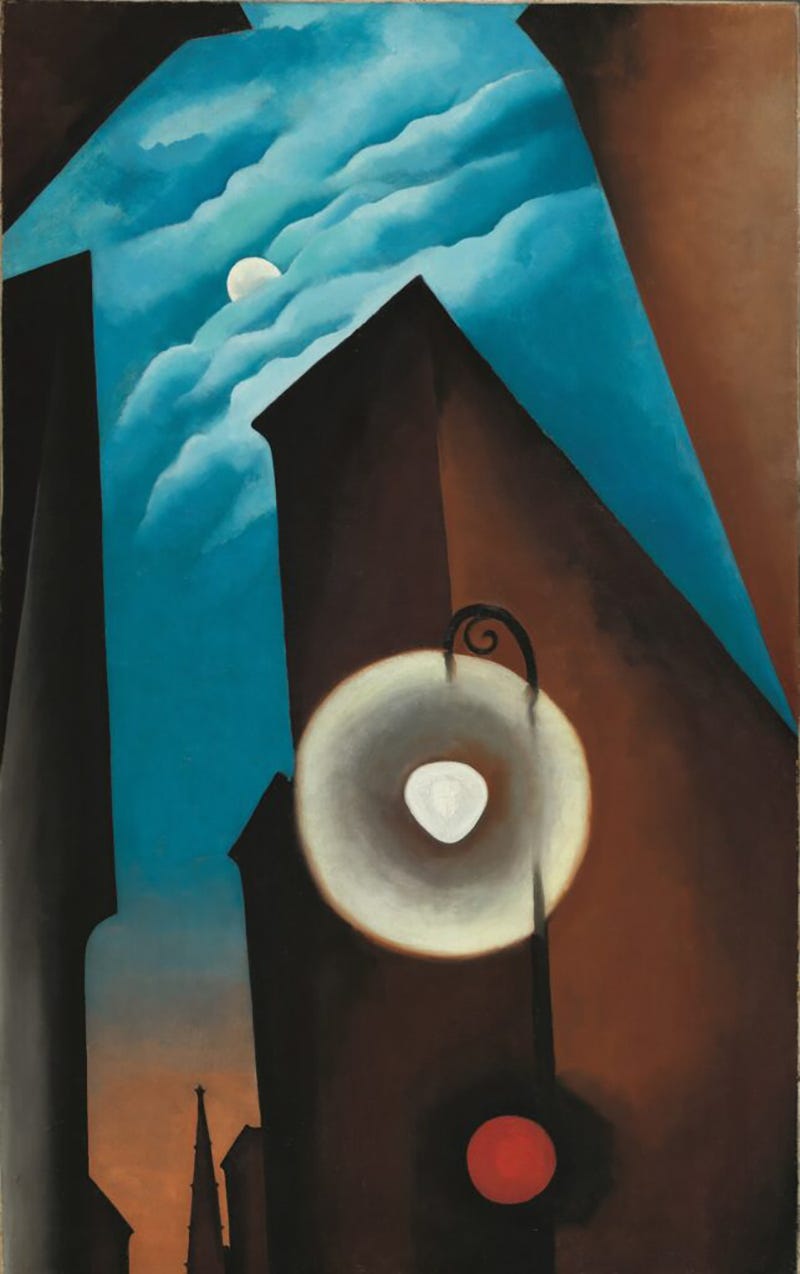
It’s ironic that while most people today associate O’Keeffe primarily with her flower paintings, some of her most powerful and groundbreaking work came from the very subjects she was discouraged from pursuing—those urban landscapes, as well as her stark desert scenes and abstract compositions. Her willingness to redirect energy from worry to creation allowed her to expand beyond the boundaries others tried to set for her, ultimately defining a much broader artistic legacy than if she had stayed within the “appropriate” subjects for women artists of her time.
After Brené Brown’s TED Talk “The Power of Vulnerability” went viral, she faced significant criticism from people questioning her research methodology and focus on personal stories.
Rather than spending energy worrying about the criticism or trying to defend herself, Brown channeled that energy into deeper research. “I was terrified people would say, ‘She’s not a researcher; she’s just sharing stories.’ So I doubled down on the data,” she explained.
This redirection of energy led to her groundbreaking work on vulnerability and courage, including her bestselling book Daring Greatly. She used the very anxiety that could have silenced her to fuel the work that ultimately made her more impactful.
When Ava DuVernay decided to become a filmmaker at age 32, she faced a sobering reality. Hollywood was, in her words, a “patriarchy, headed by men and built for men,” with an even narrower path for Black women directors.
Instead of spending her energy worrying about these systemic barriers, DuVernay redirected it toward creating her own path. Facing distribution challenges for her early films, she didn’t waste energy lamenting the closed doors. She founded ARRAY, her own distribution company to support films by women and people of color.
“I could either complain about the system or build something new,” she has explained of her approach. This redirection of energy from frustration to creation didn’t just serve her work—it transformed the landscape for countless other filmmakers who followed.
These creators didn’t just think positively. They pragmatically redirected energy toward what they could control.
I’ve been experimenting with this approach myself, asking one simple question when I find myself cycling through the same fears:
“What’s one useful action within my control right now?”
This isn’t about ignoring legitimate concerns. It’s recognizing that worry without action drains us, while directed energy builds momentum.
When I worry about past work, my one useful action might be identifying a specific thing to improve next time.
When I fret about future outcomes, my one useful action might be making today’s work as strong as possible.
When I imagine others’ judgments, my one useful action might be clarifying who I’m genuinely creating for.
When I fear failure, my one useful action might be defining what success actually means to me, not what I think it should look like to others.
The pattern is simple but powerful…
Notice the worry, and name it specifically.
Ask if it’s within your control. Identify one useful action, then channel the energy directly into that action — not tomorrow, not after more planning, but right now.
Maybe the most valuable shift I’ve experienced is seeing my creative energy as my most precious resource— more valuable than time, more important than talent.
We obsess over time management, but energy management might matter more. Ten focused, energized hours will produce more meaningful work than forty hours of worried, scattered attention.
What might you create if you redirected even half the energy you currently spend on worry?
The past is unchangeable. The future is uncertain. Others’ opinions are largely beyond your control. Failure is always a possibility.
But this moment — and what you choose to do with your energy right now — that’s entirely yours.
What one useful action will you channel your energy toward today?
Start there. And do it now.
That’s it for today. And as always, I hope you found this content helpful. If so, I’d love to hear your thoughts in the comments below.
Artfully yours,
Chris
PS… If you’re enjoying The Intentional Artist, will you take a few seconds and forward this edition to a friend? It goes a long way in helping me grow the newsletter (and support more artists).
And if you want to be an even better friend, you can give the gift of The Intentional Artist by clicking the button below. Please let us know if you choose this option so I can send over a bonus as a thank you.
And finally, I’d love your input on how I could make The Intentional Artist even more useful for you! So please leave a comment with:
Ideas you’d like covered in future editions
Your biggest takeaway from this edition
I do read and reply to every single one of them… when I’m not traveling!
Straight up facts and power-FULL advice. Thank you.