


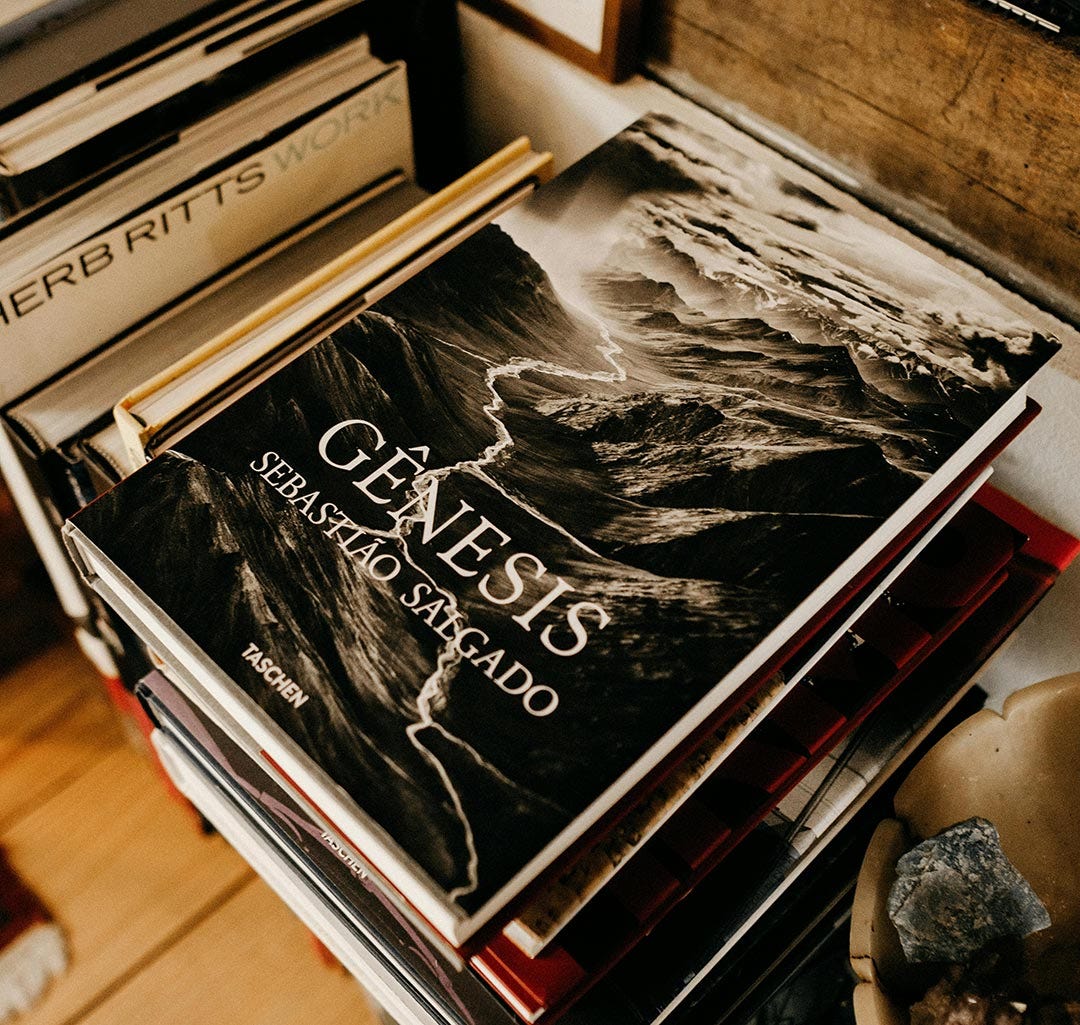
Every week, I talk to artists who are sitting on a book they haven’t made yet.
Not because the work isn’t there. Not because they don’t have enough of it. But because somewhere along the way, they convinced themselves they aren’t ready — that they need more shows, more reviews, more years, more something — before they put the work between covers.
Meanwhile, they have years of paintings, photographs, drawings, prints, sculptures. Bodies of work that collectors live with. That have hung in galleries. That audiences come back to. Work that is already doing what it needs to do.
The book they think they haven’t made yet?
It’s already there. It just doesn’t have a cover on it yet.
↓
In this week’s Intentional Artist, I want to break down the two beliefs that keep more artists from making their book than anything else — and what’s actually true about each one.
The First Belief
Ask most artists why they haven’t made their book yet, and the first answer is almost always the same.
“I’m not ready.”
It’s the most common thing I hear, and it’s almost never true.
The artist saying it has usually been making the work for a decade or more. There are paintings in collectors’ homes. Photographs hanging in shows. Prints in flat files. Drawings stacked against the studio wall. A body of work that already exists — much of it already seen by people who care about it.
The work exists. What’s missing is the belief that it counts.
Here’s what’s actually happening. They’re measuring their work against some imaginary standard of what an artist-with-a-monograph looks like, and deciding they don’t qualify yet. But a book isn’t a trophy you earn after the career is done. It’s the thing that makes the career possible.
What’s actually true
Before you make a single new piece, go back through everything you’ve already made.
Your paintings. Your photographs. Your sketchbooks. Your contact sheets. The studio work you’ve never shown anyone.
These aren’t separate from your book. They are the book. Just not yet bound, sequenced, or shaped into something a stranger can hold.
Look for the images you keep coming back to. The subjects you can’t leave alone. The work that always gets the question — what is this about? The things you’ve been making slightly differently every time for ten years, because you haven’t quite found the way to say it cleanly. But the concept is always the same.
That’s your book right there.
The book-making process becomes a lot less daunting when you realize you’re not starting from zero. You’re selecting. Sequencing. Clarifying. You’re taking everything you’ve already made and giving it a spine — literally and otherwise.
↓
The Second Belief
Once an artist starts to believe the work might actually be ready, the next thing they say is almost always the same too.
“I can’t afford to make a book.”
This one feels more real than the first, because it’s about money instead of feeling. And for a long time, it was true. A serious art monograph used to require a publisher or a vanity press — and the vanity press would quote you fifteen to thirty thousand dollars before they’d even talk to you about paper stock.
That world is gone. Almost no one outside the industry has noticed.
The artist saying “I can’t afford it” has usually, in the same year, spent more on framing for one solo show than a complete short-run book would cost. Or on a booth at an art fair. Or on a year of studio rent. The money is moving. It’s just not moving toward the asset that does the most for the career.
What’s actually true
The economics of art book printing have changed in the last decade. There’s now a real path at almost every budget — though the actual cost depends on size, page count, paper, binding, cover treatment, and run length. Any number I give you here is a range, not a quote.
Roughly speaking:
Print-on-demand, through Blurb, WhiteWall, or one of a handful of similar services, runs about $30 to $60 per copy for a hardcover photo book, depending on size and pages. No minimum order. No inventory risk. The quality has come a long way — not yet Aperture-level, but real and respectable.
Short-run offset — a properly designed hardcover monograph in a run of 200 to 300 copies — typically lands in the $5,000 to $12,000 range, total project, including design and production. The result is a real offset-printed book that holds its own on a gallery shop shelf.
High-end offset — the Aperture, MACK, or Steidl tier, with heavier paper, deeper color, refined binding, and a run of 500 to 1,000 copies — runs $10,000 to $25,000 and up. This is museum-grade production.
The mid-tier book — five to twelve thousand dollars, designed and produced — is less than most artists spend in a single year on framing, art fair booth fees, or studio rent.
The money is moving. It’s just not moving toward the asset that does the most for the career.
And the book pays for itself. Two hundred copies sold through your gallery at $60 to $80 each is $12,000 to $16,000 in revenue. A signed limited edition of ten at $300 to $500 each adds another three to five thousand. Even at the modest end, a well-made book funds itself in the first year. Then it keeps doing its work for years.
A show comes down in six weeks. A studio visit ends in an hour. A book sits on a curator’s desk for years.
The question isn’t whether you can afford to make the book.
It’s whether you can afford to keep waiting.
↓
The artists who end up with books on museum shelves aren’t necessarily the best at design or production. They’re the ones who got the right support at the right time.
The Art Book Masterclass is a small workshop for artists ready to take what they’ve already made and turn it into the book that’s already there. Eight weeks. Ten artists. Begins June 15, 2026.
👉🏻 View the full masterclass details
Not sure if the timing is right? Book a free 30-minute call. I’ll look at your work and give you an honest take on whether this makes sense for where you are right now. No pitch. Just a conversation.
Until next time…
— Chris