


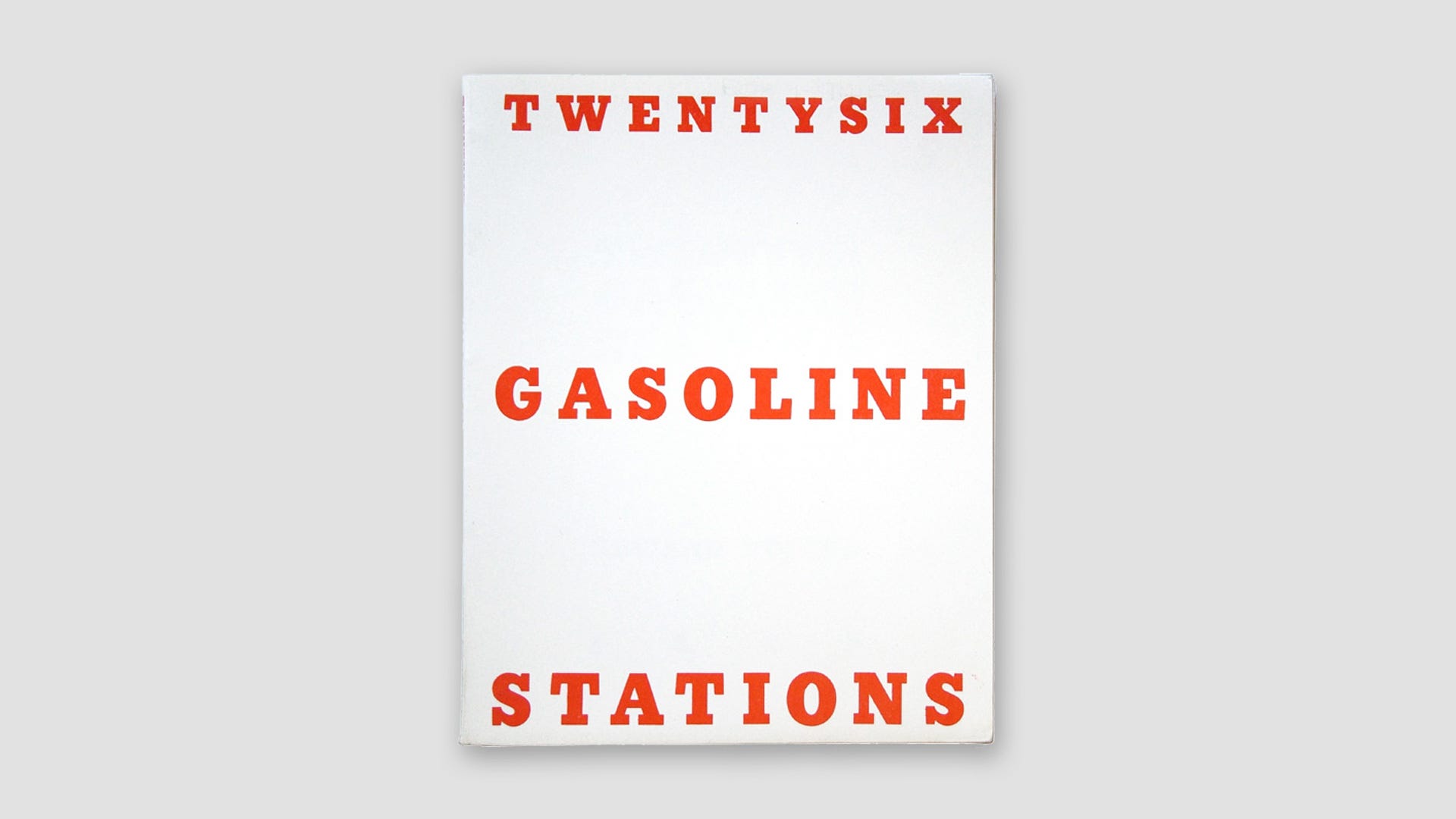
In 1963, Ed Ruscha published a book called Twentysix Gasoline Stations.
Forty-eight pages. Black-and-white photographs of twenty-six gas stations along Route 66, between his apartment in Los Angeles and his parents’ house in Oklahoma City. No essay. No foreword. No artist statement. The cover read, in his own deadpan typography, TWENTYSIX GASOLINE STATIONS.
He self-published. He printed 400 copies. He sold them for $3.50 each. Most went unsold.
The Library of Congress refused to add it to their collection. Their reasoning: it didn’t qualify as a book.
Ruscha was twenty-six years old. And he was a painter — already showing pop-influenced canvases in galleries, already pushing what painting could do with text and image. The book was a side project. A way of using photographs as flat material, the same way he used words as flat material in his paintings.
↓
That book is now considered the first modern artist book. The move it made — treating the book itself as the work, not as documentation of the work — became the foundation for everything that followed. Sol LeWitt. Lawrence Weiner. Every conceptual artist of the seventies. Every photographer who built a career through the book form. The whole post-1960s history of artist publishing starts with that one cheaply printed paperback.
First editions of Twentysix Gasoline Stations now sell at auction for $1,500 to $6,000 depending on condition. Signed copies have sold for as much as $60,000.
Ruscha followed it with Various Small Fires. Every Building on the Sunset Strip. Thirtyfour Parking Lots. Real Estate Opportunities. Records. A Few Palm Trees. Nine Swimming Pools and a Broken Glass.
Each one cheaply printed. Each one conceptually airtight. Each one now a collector’s object.
He kept making them for forty years.
↓
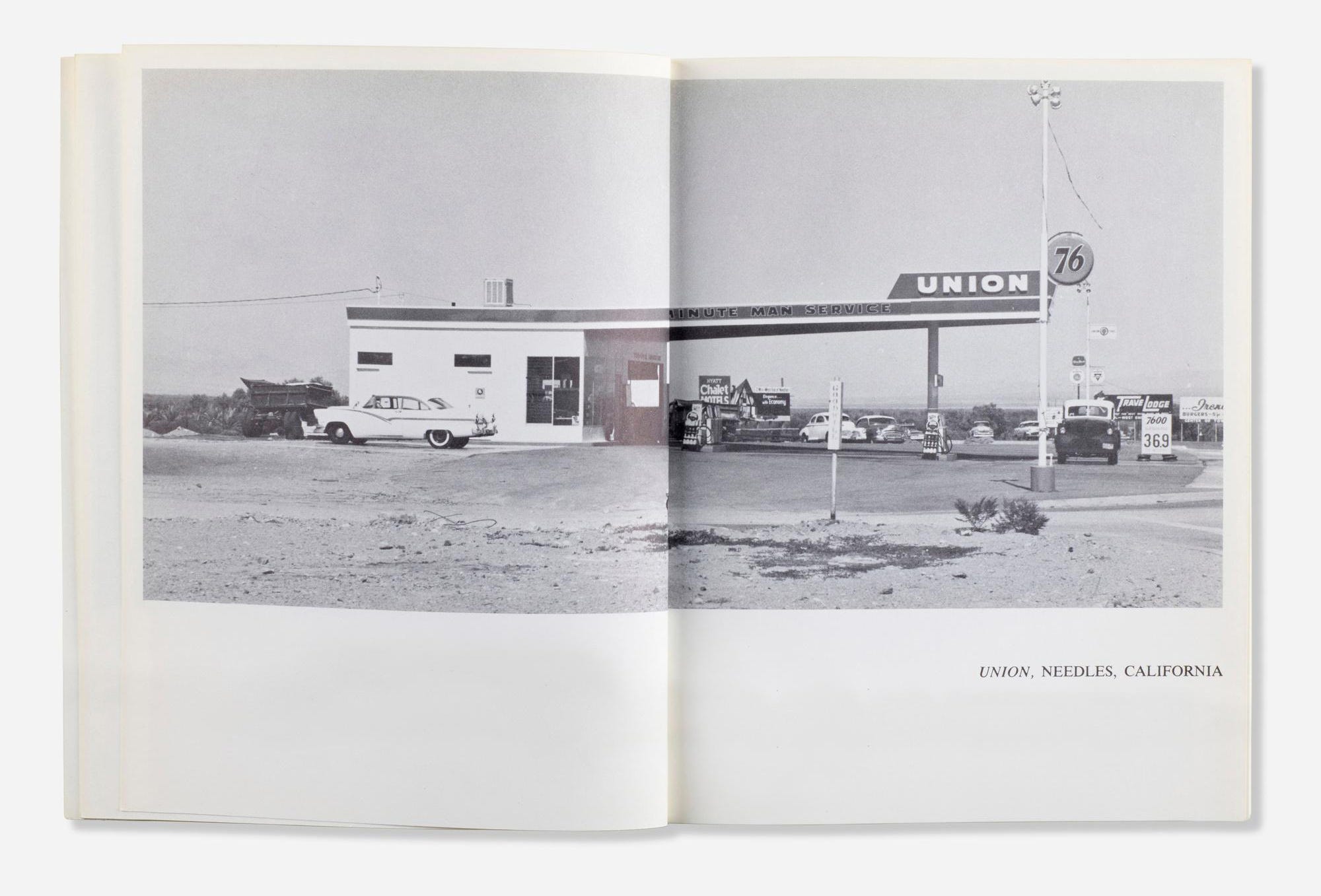
Here’s what I want you to notice about that story.
Ruscha was not famous in 1963. He was a young artist, still figuring out his work. He didn’t have a publisher. He didn’t have a gallery offering to produce a catalog. He didn’t have a curator writing his foreword. He didn’t have luxury paper, fine binding, or museum-grade reproduction.
He had an idea, twenty-six photographs, and the willingness to make the object.
The book made the career. Not the other way around.
That’s the part most artists get backwards. They believe the book is the trophy you earn after you’ve made it. Ruscha proved the opposite. The book is the thing that turns a group of images into a project — that says this is a body of work, with a beginning, an end, and an argument. Before the book, twenty-six gas station photographs were twenty-six photographs. After the book, they were a body of work that changed the course of contemporary art.
The book is what turns images into a project.
↓
You don’t need to be famous to make your book. You don’t need a publisher. You don’t need premium production. You don’t need to be a photographer, either — Ruscha was a painter, and the book form belongs to every medium. Painters, sculptors, printmakers, ceramicists, conceptual artists. All of them.
You need an idea that holds together, a body of work that earns its sequence, and the willingness to make the object.
That’s what we do in the Art Book Masterclass.
Eight weeks. Ten artists. Begins June 15, 2026.
👉🏻 View the full masterclass details
Not sure if the timing is right? Book a free 30-minute call. I’ll look at your work and give you an honest take on whether this makes sense for where you are right now. No pitch. Just a conversation.
Until next time…
— Chris
P.S. Ruscha printed 400 copies of Twentysix Gasoline Stations and most of them sat unsold for years. The ones that did sell ended up in the hands of people who recognized what they were holding. If your book ends up in five of the right hands, it will do more for your career than a year of trying to get into the right group show.