


Here’s a story that might change how you think about failure.
June 9, 2024. Dartmouth College. It’s raining steadily on what should have been a perfect graduation morning in New Hampshire. Students and families are huddled under umbrellas, probably wondering if this outdoor ceremony was such a great idea.
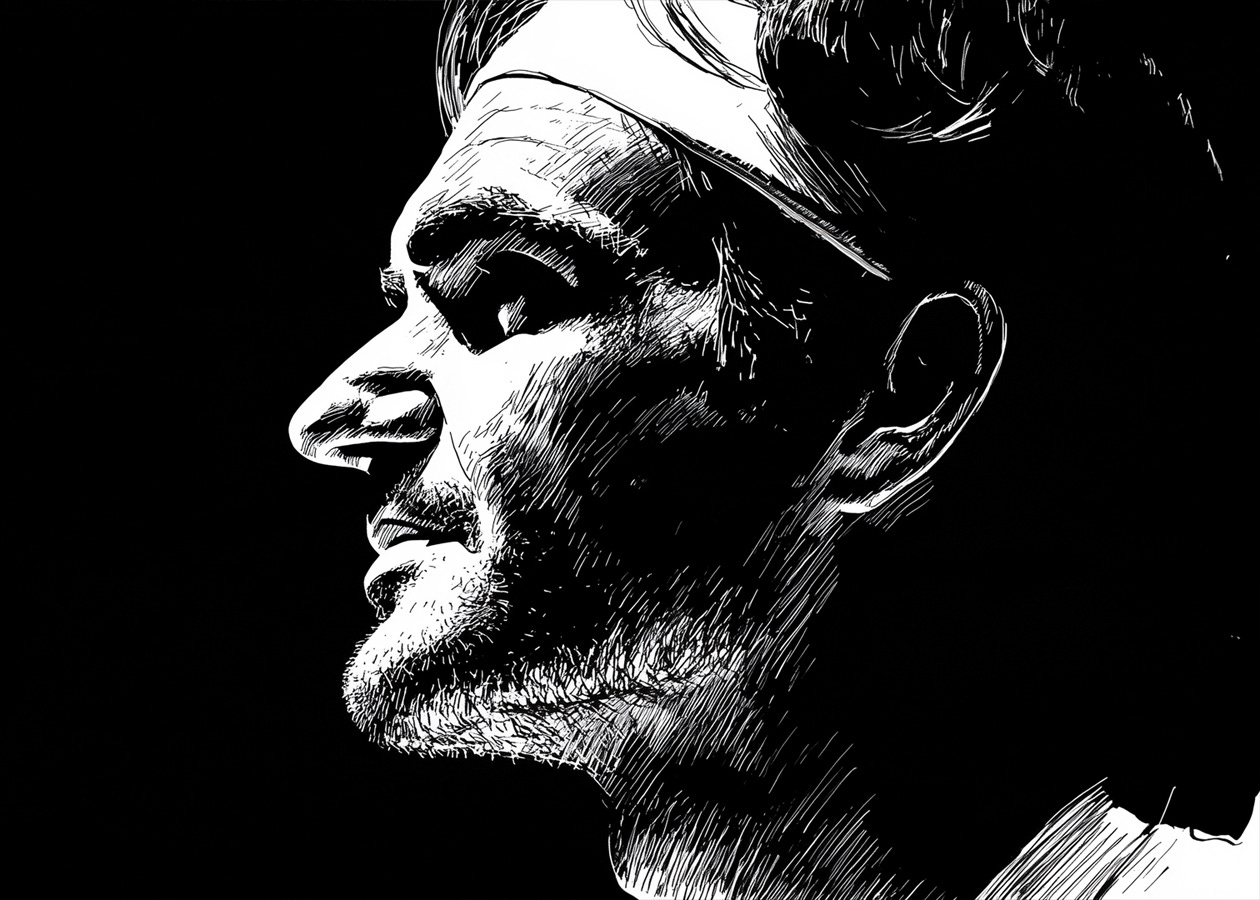
The commencement speaker takes the stage. Roger Federer. One of the greatest tennis players who ever lived. Twenty Grand Slam titles. Won almost 80 percent of his matches over two decades. The guy who made tennis look like poetry in motion.
And then he asks the crowd a question that stops everyone cold.
“What percentage of points do you think I won in those matches?”
The audience is probably thinking big numbers. This is Roger Federer we’re talking about. The man who redefined excellence in his sport. Surely 70 percent? 80 percent?
“Only 54 percent,” he said.
Why am I bringing this up now?
Well, I'm a lifelong tennis fan. Growing up in Sydney, I used to stay up until 2, 3, sometimes 4 AM watching Wimbledon and the French Open because of the time difference. Now, living in Los Angeles, I was watching this year’s French Open final between Carlos Alcaraz and Jannik Sinner (at a much more reasonable hour 😉), and something about their raw emotion on court made me think of Federer. I was reminded of his Dartmouth speech and so I went back and rewatched it again.
If you haven’t seen Federer’s Dartmouth speech, it’s really worth watching. (But please finish reading the rest of this story first 🙏🏻):
Now, I’m telling you this story because there’s something profound happening here that goes way beyond tennis. And it reveals our deepest fear about what it means to be excellent at anything.
We’re terrified of our 46 percent.
Here’s what I mean. For years, we watched Federer glide across tennis courts like he was floating on air. That one-handed backhand that looked like brushstrokes on a canvas. The way he never seemed to break a sweat, even in five-set marathons.
We saw effortlessness. We saw perfection.
But what Federer revealed that rainy morning was that excellence isn’t about never failing. It’s about failing constantly and showing up anyway.
Forty-six percent of the time, his shots didn’t work. His strategies fell apart. His best efforts weren’t enough.
And he became one of the greatest athletes who ever lived.
The mythology of effortless
We’ve built our entire understanding of success around a lie.
The lie says that truly talented people make things look easy. That struggle is a sign of inadequacy. That if you’re working hard, sweating, failing, revising – you’re not good enough yet.
This mythology is everywhere. We see the polished TED talk and forget the months of preparation. We admire the elegant solution and ignore the dozens that didn’t work. We celebrate the breakthrough and erase the setbacks that led to it.
But here’s what psychologist Angela Duckworth discovered in her research on grit:
“The most successful people aren’t the ones who never struggle. They’re the ones who have learned to struggle well.”
Grit, she found, is about passion and perseverance for long-term goals. It’s about getting back up, not about never falling down.
Federer’s 54 percent is pure grit. It’s the willingness to lose 46 percent of the points and still show up for the next one with complete commitment.
The cost of hiding our failures
But most of us do the opposite. We hide our 46 percent.
We edit out the struggle from our stories. We present only the successful attempts. We perform competence instead of admitting learning.
And in doing so, we rob ourselves of the very thing that builds real resilience: the practice of failing and continuing anyway.
Think about it. When was the last time you admitted to someone that you didn’t know how to do something? When did you last share a project that didn’t work out? When did you reveal the messy process behind a clean result?
We’ve become so afraid of appearing incompetent that we’ve lost the ability to appear human.
But here’s what’s interesting: research shows that people who admit their failures and share their learning process are actually perceived as more competent, not less. They’re seen as more trustworthy, more relatable, more real.
The thing we’re most afraid of – showing our imperfection – is actually what creates the deepest connections.
The courage of authenticity
What Federer did that morning wasn’t just share a statistic. He showed moral courage.
It takes courage to admit that your success is built on a foundation of constant failure.
It takes courage to reveal that behind the effortless performance is relentless effort.
It takes courage to be honest about what excellence actually costs.
“When you lose every second point, on average,” Federer explained, “you learn not to dwell on every shot. You teach yourself to think, ‘OK, I double-faulted. It’s only a point.’“
This is what resilience actually looks like. Not the absence of failure, but a different relationship with it.
Instead of seeing each failure as evidence of inadequacy, Federer learned to see it as information. Instead of letting a lost point derail his confidence, he used it to fuel his focus on the next point.
This is the opposite of perfectionism. Perfectionism says: “I must never fail.” Grit says: “I will fail constantly, and that’s how I’ll improve.”
The practice of failing forward
Here’s what Duckworth’s research reveals about people with grit: they have what she calls a “growth mindset.” They believe that abilities can be developed through dedication and practice.
When they fail, they don’t think, “I’m not good at this.” They think, “I’m not good at this yet.”
Federer’s 54 percent is a master class in growth mindset. He’s essentially saying: “I’ve spent my entire career being wrong 46 percent of the time, and each time I was wrong, I learned something that made me better.”
This is radically different from how most of us approach failure. We see it as something to avoid, minimize, or hide. But what if failure isn’t the opposite of success? What if it’s the raw material of success?
What if your 46 percent isn’t your weakness – it’s your competitive advantage?
The freedom of imperfection
There’s something liberating about Federer’s admission. It gives the rest of us permission to be human.
If one of the greatest athletes who ever lived was wrong nearly half the time, maybe the rest of us can stop pretending we have all the answers.
Maybe we can admit when we don’t know something. Maybe we can share the projects that didn’t work. Maybe we can talk about what we’re learning instead of only what we’ve mastered.
Maybe we can stop performing perfection and start practicing authenticity.
Because here’s what I’ve noticed: the people who are most afraid to show their failures are often the ones who need the most practice with resilience. They’ve spent so much energy avoiding failure that they’ve never learned how to fail well.
But failure, like any skill, improves with practice. The more you fail, the better you get at failing. The better you get at failing, the more willing you are to take risks. The more risks you take, the more you learn. The more you learn, the better you become.
It’s a virtuous cycle. But it starts with the courage to show your 46 percent.
What your 46 percent reveals
So here’s the question: What’s your 46 percent?
What are you hiding because you think it makes you look incompetent? What struggles are you editing out of your story? What learning process are you afraid to reveal?
Because here’s what I know: your 46 percent isn’t your shame. It’s your strength.
It’s proof that you’re playing a game worth playing. It’s evidence that you’re taking risks worthy of your potential. It’s the foundation on which your 54 percent is built.
Federer didn’t become great in spite of losing 46 percent of his points. He became great because he learned to lose those points gracefully and show up fully for the next one.
That’s not just athletic excellence. That’s human excellence.
And it’s available to all of us, if we have the courage to embrace our imperfections instead of hiding them.
The question isn’t whether you’ll fail. The question is whether you’ll fail with grace, learn from it, and show up for the next point anyway.
That’s what grit really means. That’s what authenticity really costs. And that’s what real success is actually built on.
Not the absence of failure, but the presence of courage in the face of it.
Until next time,
—Chris
P.S: What’s your 54 percent built on? Share in the comments.
If you’re enjoying The Intentional Artist, will you take a few seconds and forward this edition to a friend? It goes a long way in helping me grow the newsletter (and support more artists).
And if you want to be an even better friend, you can give the gift of The Intentional Artist by clicking the button below. Please let us know if you choose this option so I can send over a bonus as a thank you.
There are so many places where I hide or shrink to appear more competent. In large, loud crowds. In small, intimate circles. I'm not consistently shining my authentic self. Like a chameleon, I adapt to my environment, changing and shifting my energy to fit in. I'm always editing and refining, redefining, who I am. Who I am becoming.